3 min read
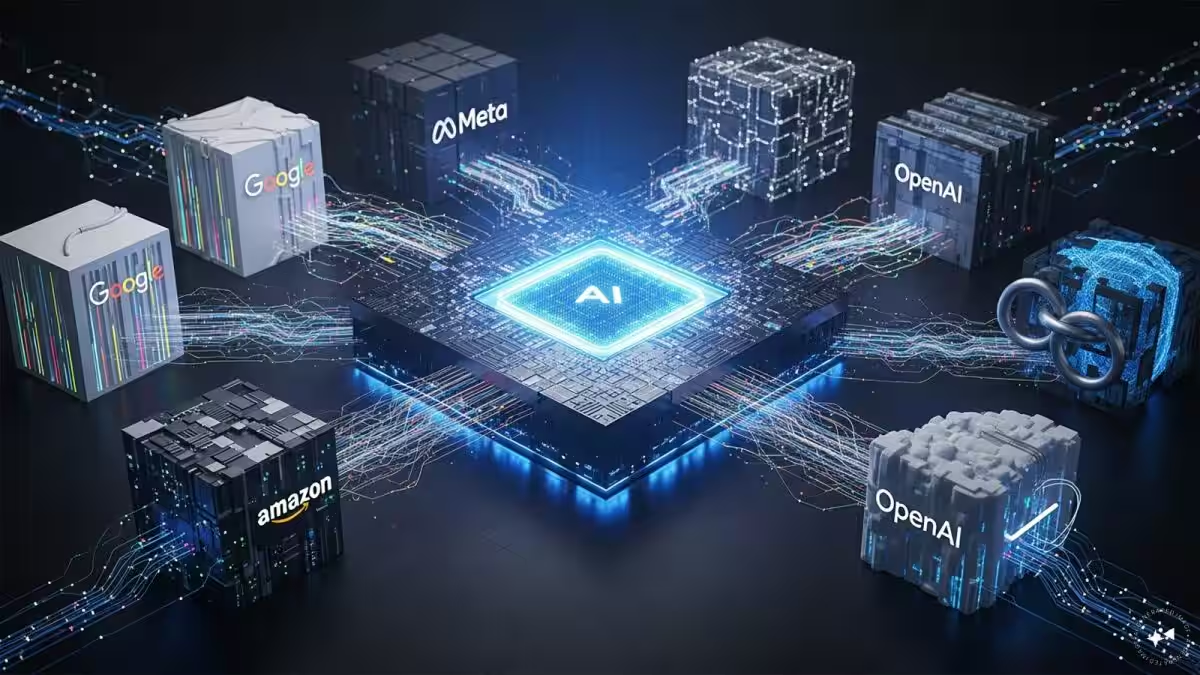
The artificial intelligence industry is entering a new phase of competition as Google intensifies its efforts to challenge Nvidia’s dominance in the AI chip market.
For years, Nvidia has been the undisputed leader in AI hardware, with its GPUs powering everything from ChatGPT-style applications to enterprise AI systems. However, Google is now making significant investments in its custom Tensor Processing Units (TPUs), creating what could become the strongest challenge Nvidia has faced in the AI era.
Recent reports indicate that Google is aggressively expanding its TPU ecosystem, securing major partnerships and increasing the availability of its AI infrastructure through Google Cloud. The company has also introduced its latest TPU 8t and TPU 8i chips, specifically designed for AI training and inference workloads.
Why Nvidia Leads the AI Market
Nvidia currently dominates the AI accelerator market thanks to its powerful GPUs and the CUDA software ecosystem that developers have relied on for years.
Most leading AI companies, including OpenAI, Microsoft, Meta, and countless startups, depend heavily on Nvidia hardware for training and deploying large language models.
This dominance has allowed Nvidia to capture a massive share of the rapidly growing AI infrastructure market.
Google’s TPU Strategy
Google has been developing TPUs for more than a decade, initially using them internally to power products such as Search, YouTube, and Gemini AI.
Today, the company is expanding TPU access to enterprise customers through Google Cloud. Its newest TPU generation introduces specialized hardware optimized for the emerging era of AI agents and large-scale inference workloads.
Google says the new chips offer major improvements in performance and efficiency, potentially reducing AI infrastructure costs for customers.
Why Companies Want Alternatives
The AI boom has created enormous demand for computing power.
As demand grows, many organizations are looking for alternatives to Nvidia to reduce costs, diversify suppliers, and avoid infrastructure bottlenecks.
Google’s TPUs have become increasingly attractive because they are designed specifically for machine learning tasks and are tightly integrated with Google’s cloud platform.
The Future of the AI Chip Race
Industry analysts believe the battle between Google and Nvidia could reshape the AI infrastructure landscape over the next several years.
While Nvidia remains the market leader, Google’s investments in custom silicon, cloud infrastructure, and AI services demonstrate that the company is serious about building a long-term alternative.
The outcome of this competition could influence how future AI models are trained, deployed, and scaled across industries worldwide.
Final Thoughts
Google is not replacing Nvidia overnight. Nvidia still possesses a significant advantage in market share, developer adoption, and software tooling.
However, Google’s expanding TPU ecosystem, new AI infrastructure investments, and enterprise partnerships show that the AI chip market is becoming more competitive than ever.
As artificial intelligence continues to transform industries, the race between Google and Nvidia may become one of the most important technology battles of the decade.
